project ongoing created updated
flat fell foot
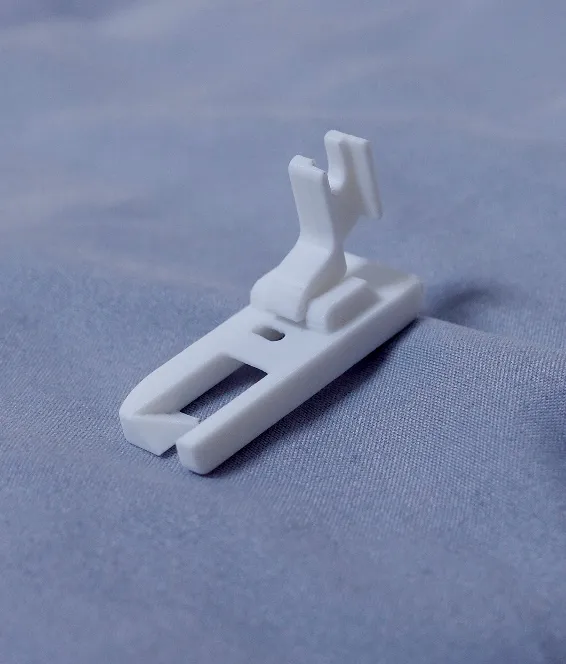
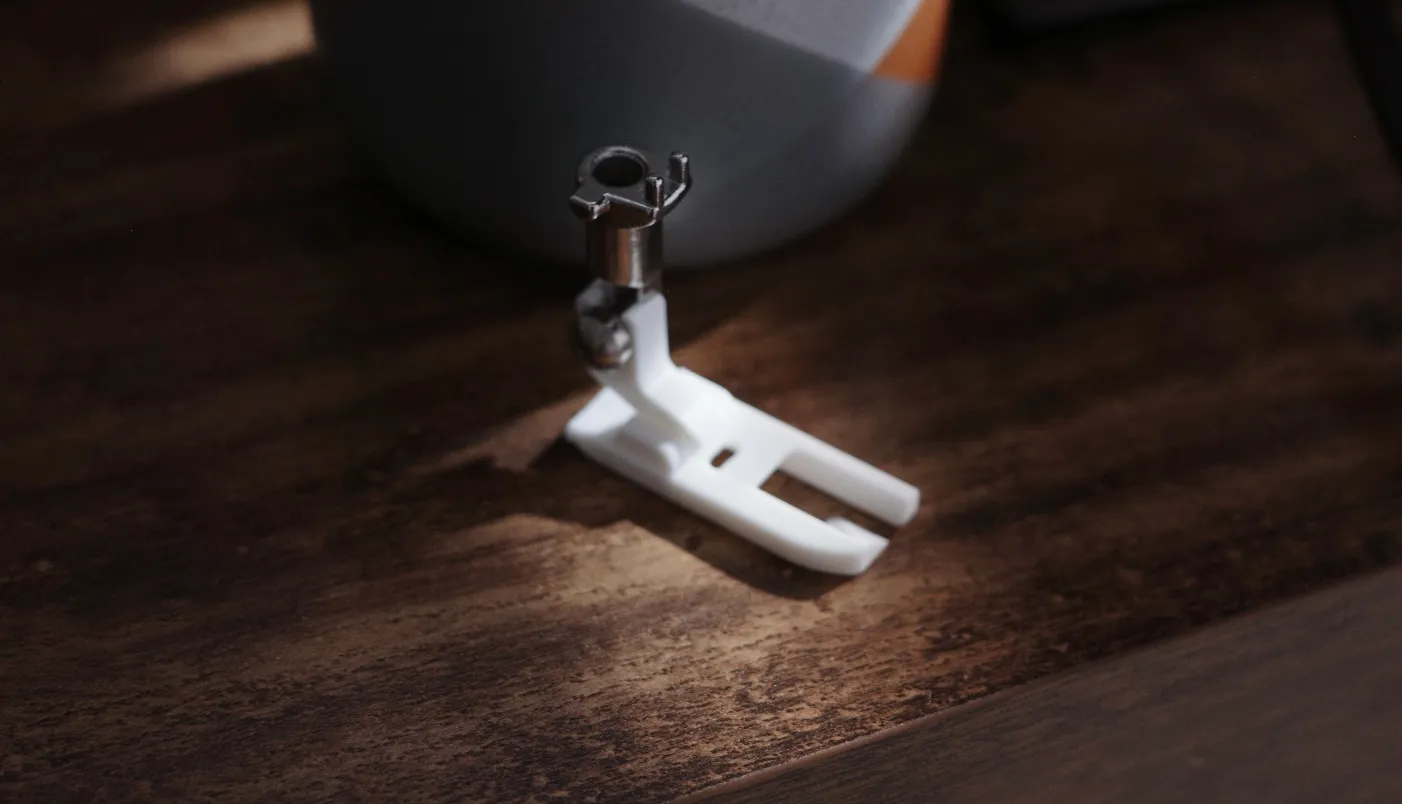
3d-printing my version of a flat-fell foot for my Bernina vintage machine
- Machine: vintage Bernina 807
- Goal: flat-fell foot for 8mm SA (source model was 12mm)
- Source files: flat fell foot · snap-on adapter
- Modelled in: Fusion · printed: ABS
- Parametric: bar only
pin_di1.62mm (1.64 too big) - Status: v2 to improve: clearance height of the bar, thickness of the right side foot
In the middle of sewing my first button up shirtI used the Jenna pattern that came with the learn-to-sew button-up class. Read more about the process here, I realised I didn’t have a flat fell foot. Like the lunatic I am, I decided to make it a project and revive my 3d modelling skills and spend 12 hours on it instead of just shelling out cash for itAccording to this site, it’s £37. . To be fair, it’s quite expensive to get an original foot for an old style bernina attachment, so I felt justified.
What I know:
- I have a 3d printer
- I have some rudimentary modelling experience with Rhino and shapr3d
- There’s someone out there who does this for a living and has probably put out a flat fell foot model, AND someone else who has come up with a snap-on attachment for vintage sewing machines
- The Bernina original foot is expensive
- I have a 3rd party adaptor that only partially works
- I have a snap-on invisible zipper foot that cost me a fortune and I’ve never been able to use, because I didn’t have the adaptor attachment
Best case, I wouldn’t have to touch the models. Worst case, I’d have to cry through editing someone else’s mesh. Unsurprisingly, I found base files for both the flat fell footFlat fell foot for Bernina and a snap-on adapterSnap on foot attachment. The only issue: the flat fell foot was for a wider seam allowance (12mm instead of the 8mm I needed), and the adaptor wasn’t specifically for Bernina. I was hopeful the adaptor would just fit, because most OEM adapters are the same size. And for the flat fell foot, how hard can it be to make it work for a smaller seam allowanceApparently very hard. Cost me my sanity and a sleepless weekend. ? Ha ha.
The plan:
- Print the flat fell foot and adaptor at its original size.
- Check the measurements against the adaptor I already have.
- Attach to the machine and check the height and clearance.
- Edit the foot mesh in Fusion to shrink it to 8mm, making what I can parametricIMPORTANT: DO NOT OVER ENGINEER ! .
- Test print.
- Assemble with the adaptor.
- Sew a flat-felled seam.
Printing the original files
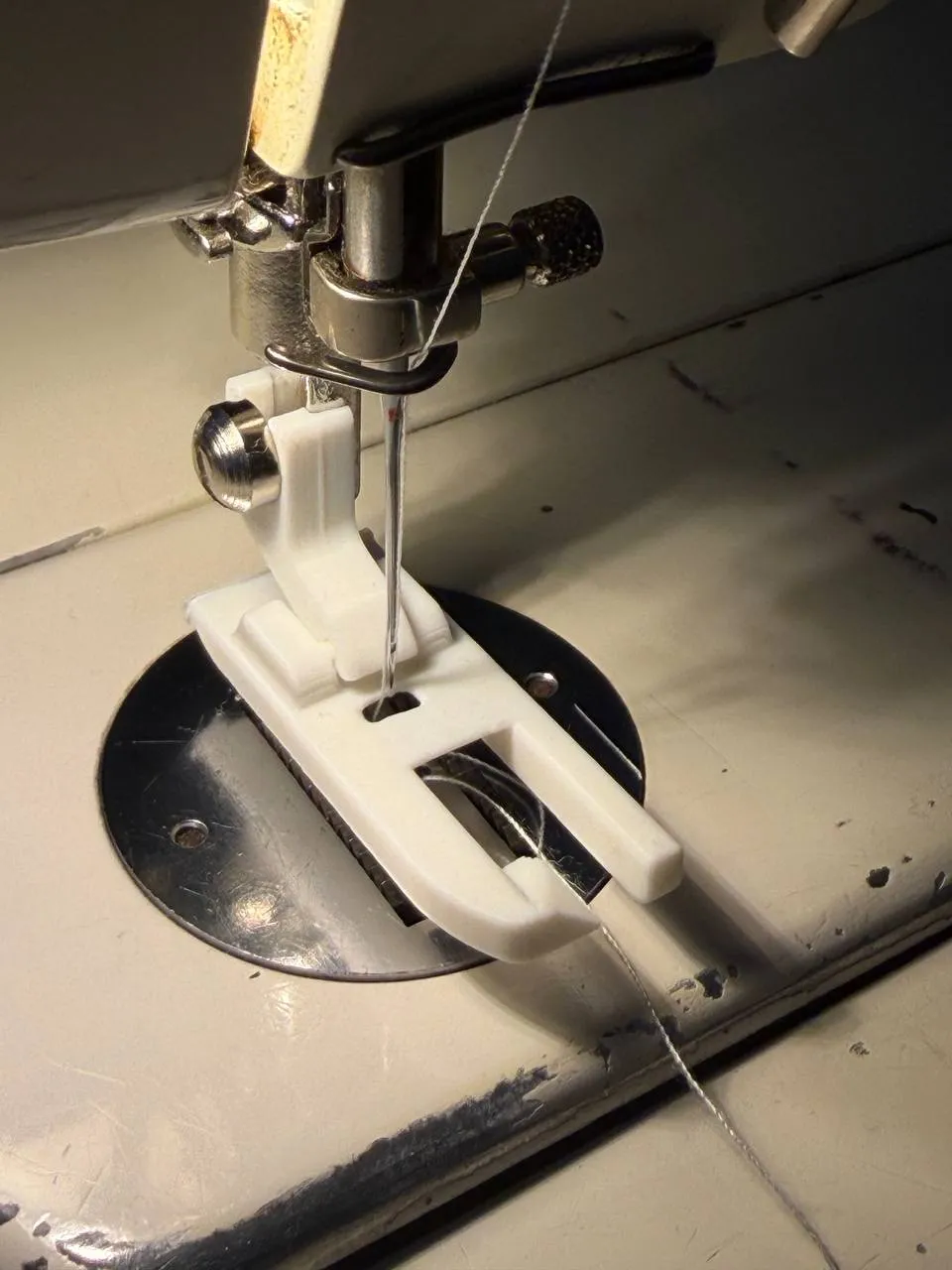
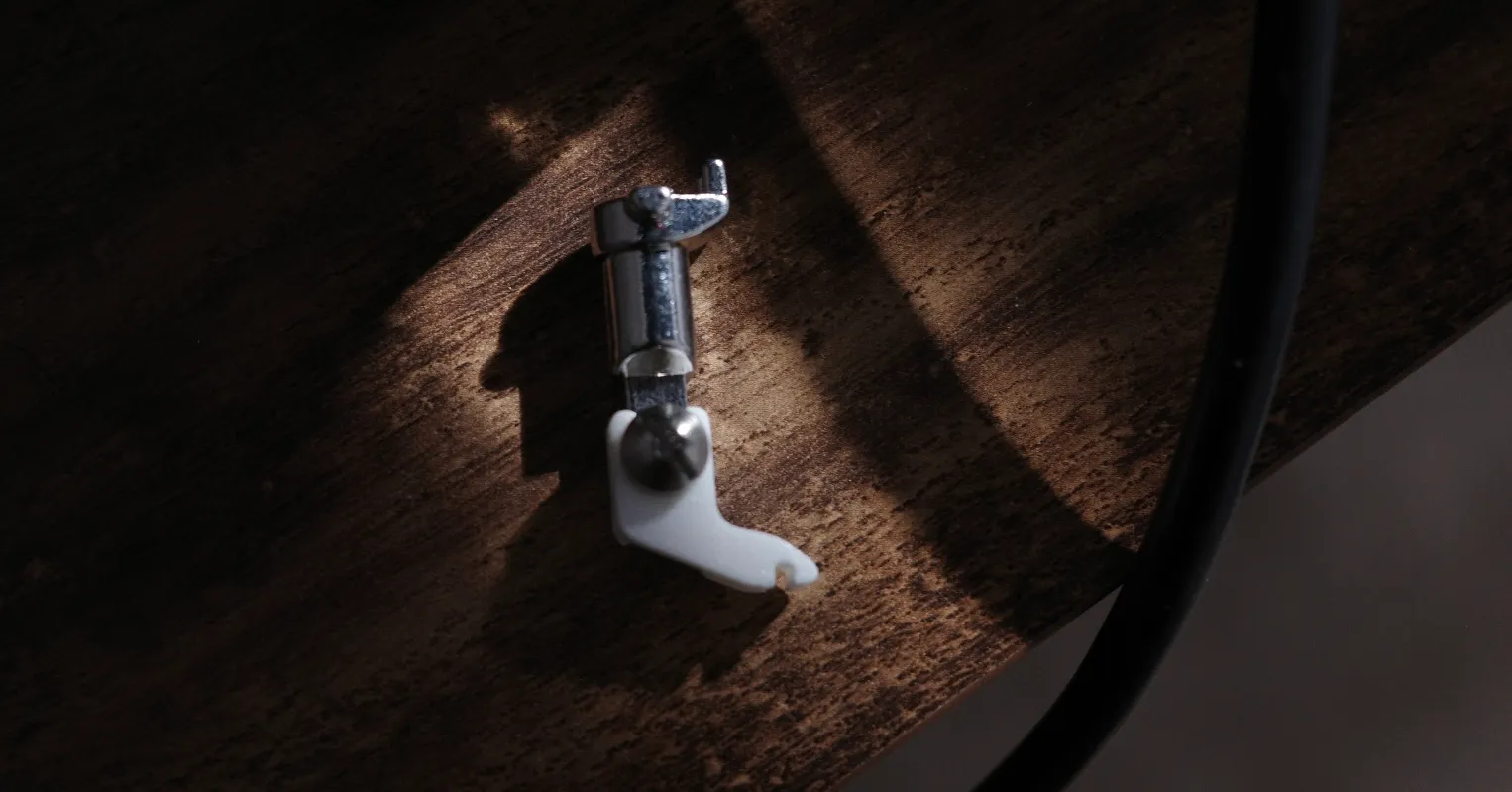 To my surprise, both the ankle and the foot printed perfectly. I was mostly worried about whether the clearance for the bar that attaches the foot to the ankle would be correct, and it was more or less a good fit. I knew I’d have to do some fiddling around with it, so making it parametric would be important. I attached it to my machine to test.
findings
- needle position is passable (does not hit the sides at all)
- ankle -> snap on attachment acceptable but needs improvement
- I’m not happy with how smoothly the foot moves up and down when it’s sewing, and that’s probably because these are two separate models where the tolerances for the snap on attachment bar are not tuned.
- machine is able to sew a flat felled seam properly
- I do feel like the rightmost area of the foot might be a little too high. There is a lot of pressure on the fabric on this side when it sews, but I won’t improve this until I’m able to successfully print the smaller flat fell foot.
Modelling my version

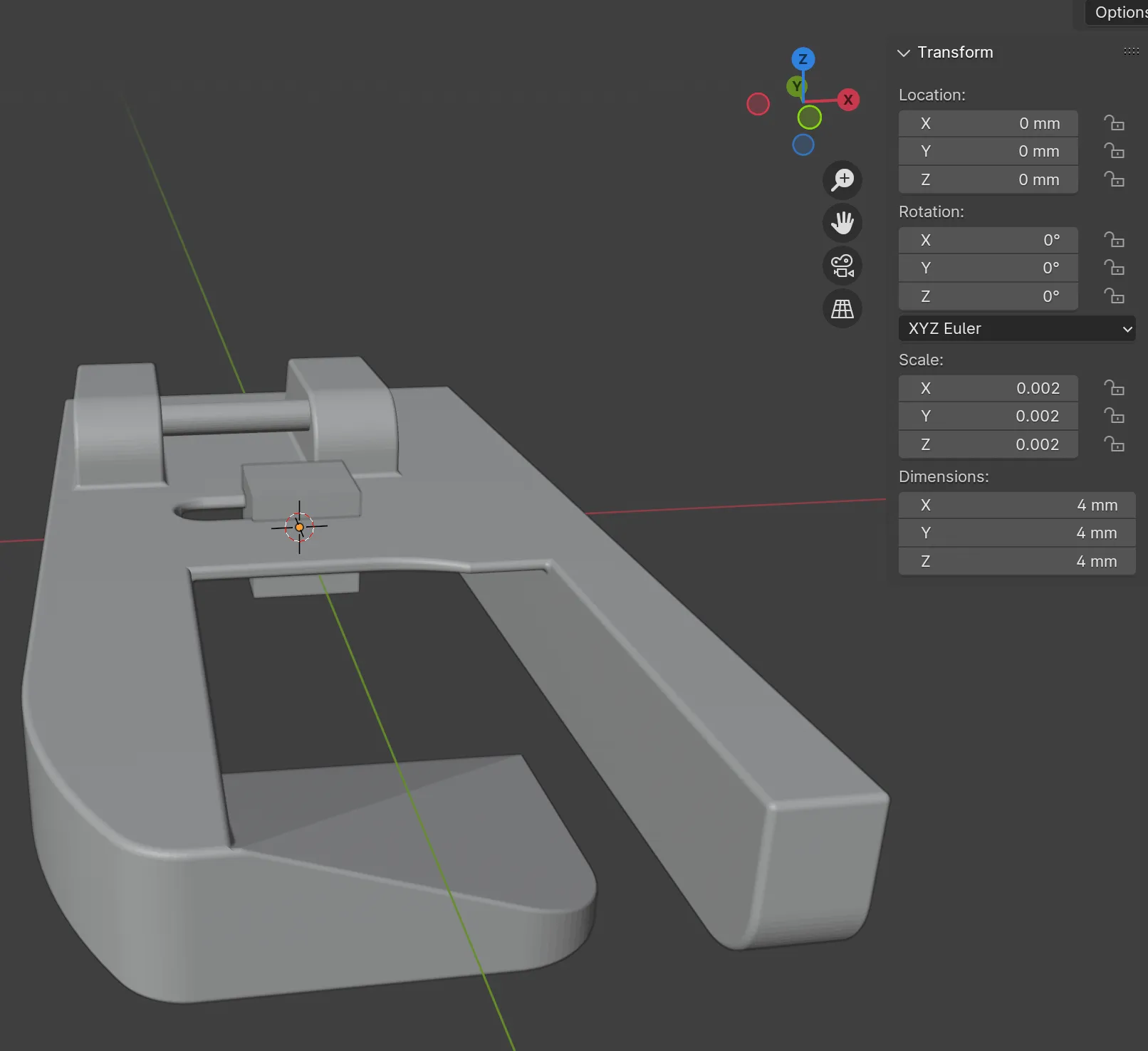
I forgot how hard it was to edit someone else’s mesh. I knew it would be difficult, but I forgot how difficult it would beJust a disclaimer, even when I was doing some modelling before, I wasn’t very good. I also am used to Rhino, but it’s too expensive for me to use, so half of this is googling fusion 360 commands. 😭 I thought I could just cut through the centre of the foot and attach the two sides to shrink it but then that would mean messing up the needle placement which was already at the right spot. I did consider remodelling it from scratch with in hindsight would have been much faster, but decided I didn’t want to spend more time reading up on fusion. I ended up making only the bar attachment on the foot parametric, and I’m glad I did.
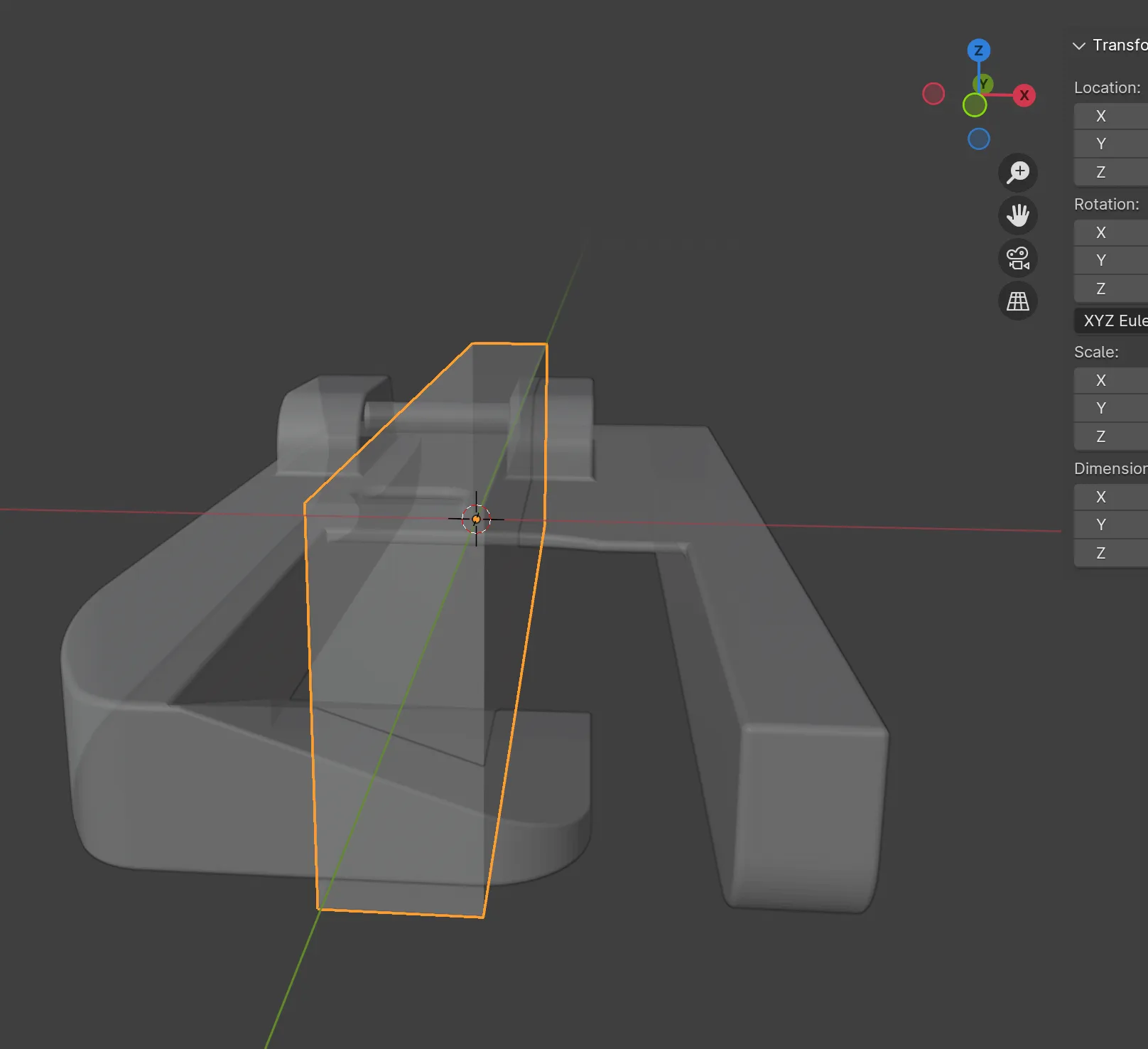
First print: the bar wouldn’t snap
As predicted, it wasn’t a perfect first print. All in all it printed alright, except as predicted, the bar wouldn’t snap onto the adaptor. It turned out I’d forgotten to test the tolerance of the snap-on bar, and the actual invisible zip foot was much wider than what I had on the STL. Luckily I’d made the bar parametric, so it was just a matter of changing the diameter of the circle and adding a bit more vertical height to the two sides holding the bar together.
adjustments
- added height to the shapes holding the bar
- increased
pin_dito 1.64mm first (too big), settled on 1.62mm
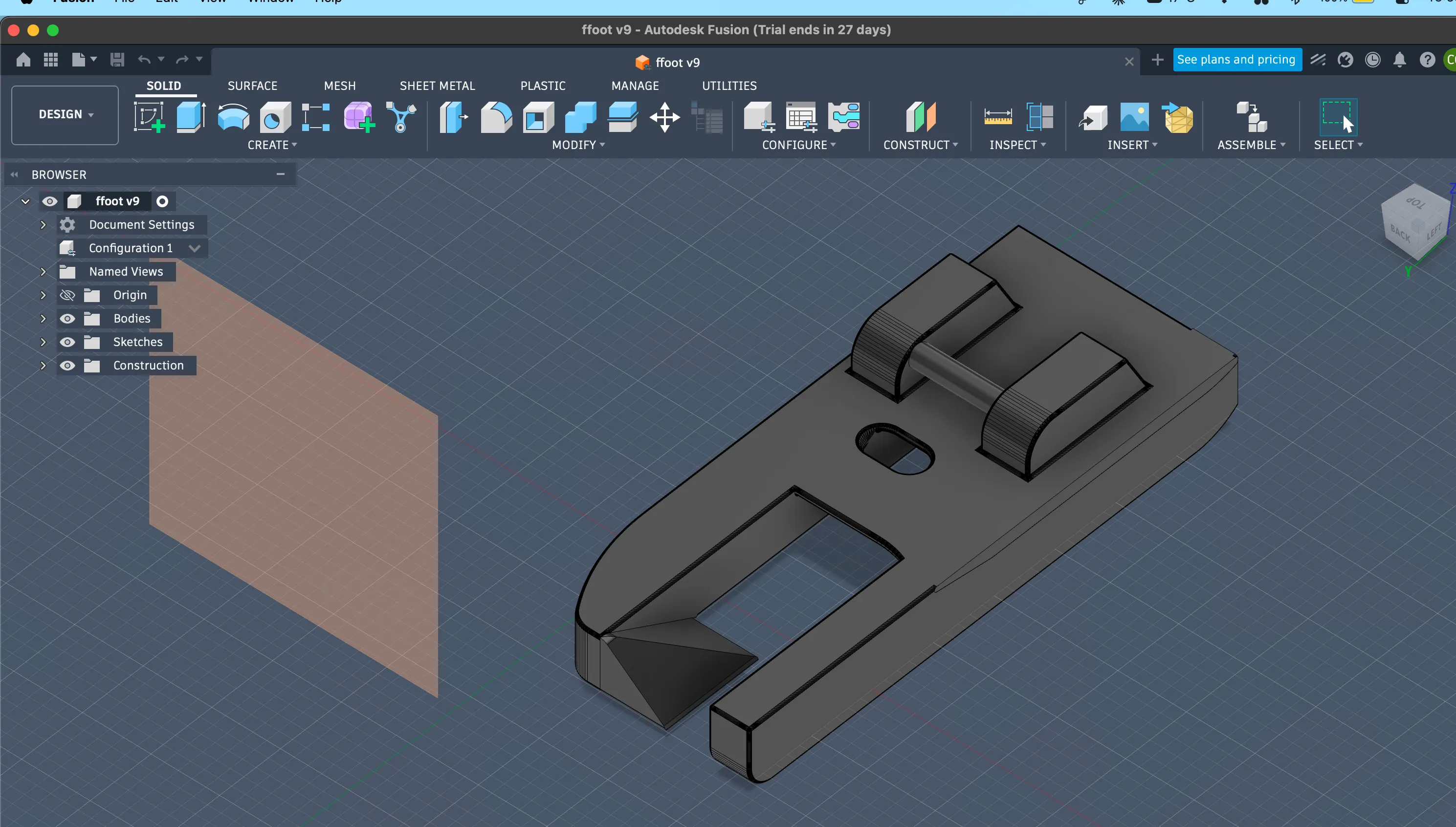
Moment of truth
After doing a few more prints of the foot with different bar diameters, it was best on 1.64 diameter. I reprinted everything and finally sewed with it on my machine! I was able to complete my Jenna buttondown shirt with it. Overall I’m quite pleased with the turnout of this little side quest, and I do think it was worth it to test. I’ll continue to improve on this foot, hopefully have a good base for making other feet.
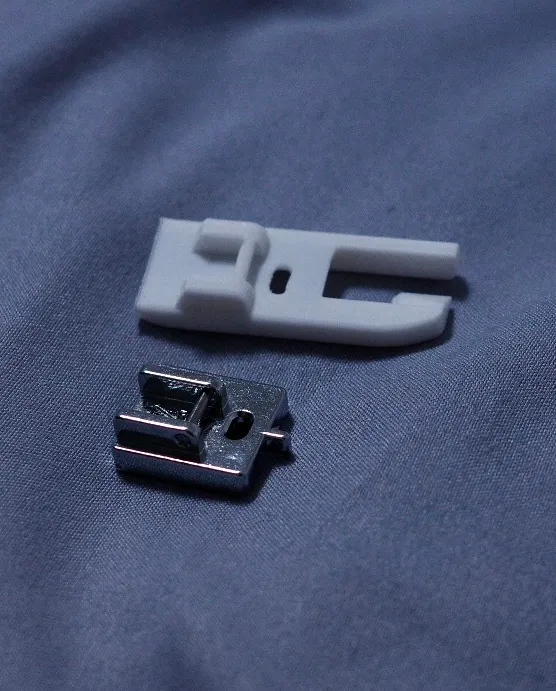
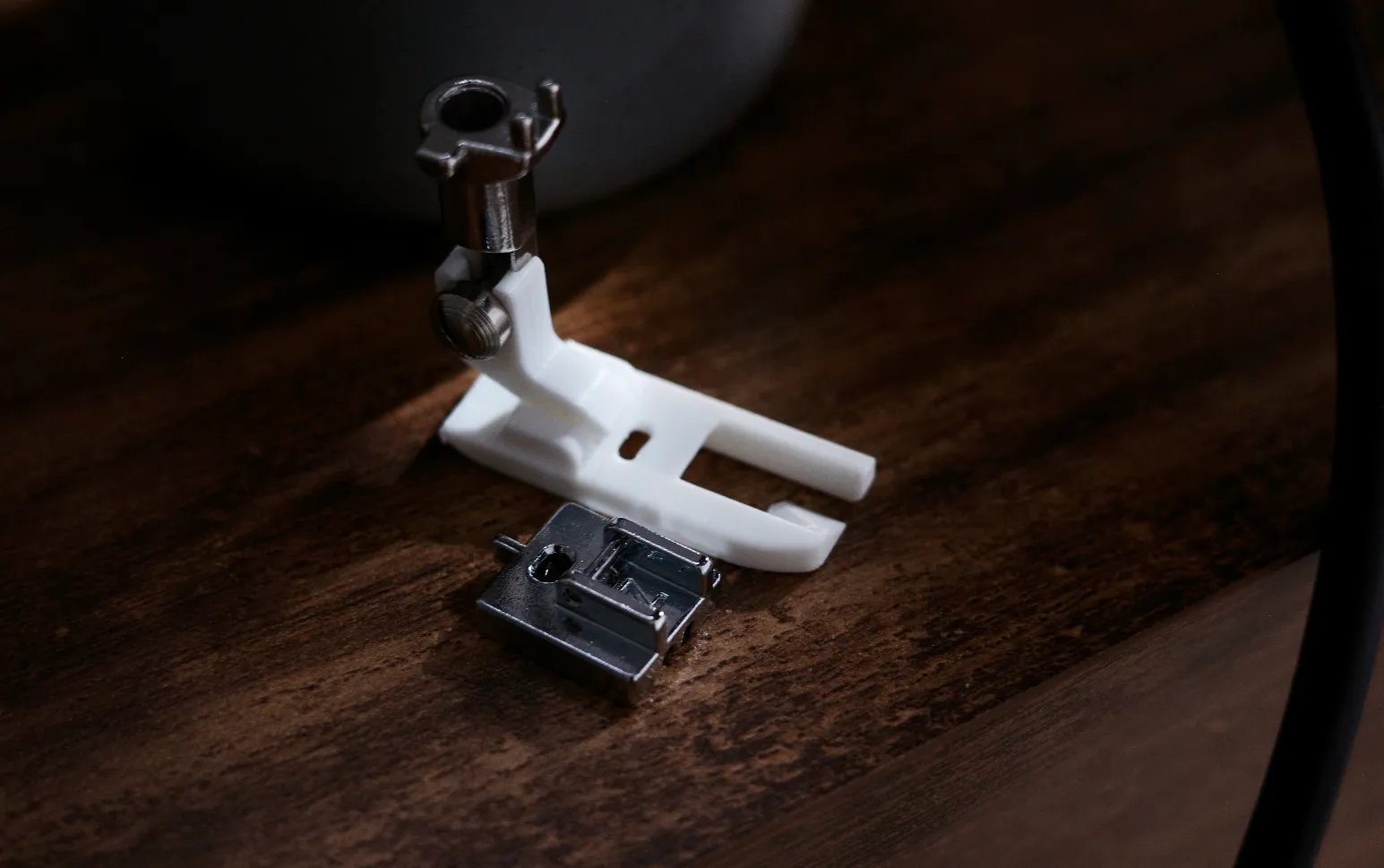
Things to improve
- clearance height of the bar
- decrease thickness of the right-side foot
nearby